

12 Oct 2025

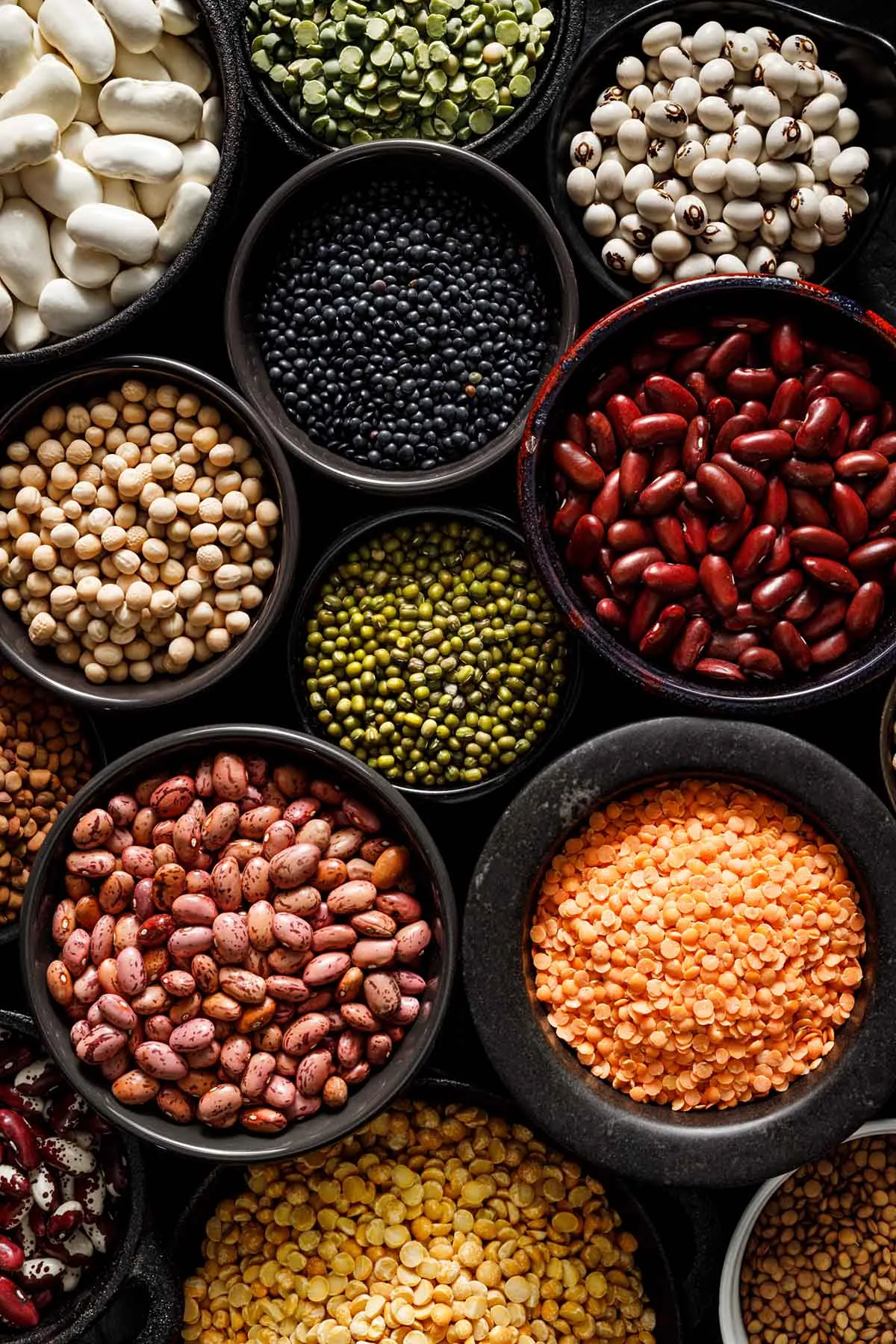
Beans are available many shapes, colours, and flavors, and are a part of on a regular basis cooking the world over. On this submit, I’m sharing 58 necessary forms of beans with names, footage, and makes use of. You’ll discover each Indian staples like rajma, moong, and toor dal, in addition to world favorites corresponding to black beans, pinto, and cannellini beans. This record provides you a transparent overview of probably the most generally cooked and eaten beans with out overwhelming you with a whole bunch of uncommon varieties.
Most of those beans are a part of on a regular basis Indian cooking, whereas some are extra frequent in world cuisines and is probably not simply accessible right here.
I’ve included them so you’ve a transparent reference to each native staples and worldwide varieties. Consider this as a helpful information you’ll be able to return to everytime you wish to perceive or determine various kinds of beans.

Beans belong to the plant household Fabaceae (Leguminosae), one of many largest households on the earth that additionally consists of lentils, peas, chickpeas, peanuts, and soybeans. They’re the edible seeds of those crops, grown and eaten worldwide.
From moong and toor dal to kidney beans and soybeans, these tiny seeds are wealthy in protein, fiber, and vitamins, making them an necessary a part of day by day meals throughout cultures.
Beans are a part of world meals cultures in addition to Indian staples. Indian kitchens use rajma, chana, moong, urad, and toor dal in dals, curries, stir-fries, and snacks. In Latin America, black beans and pinto beans are on a regular basis meals.
The Mediterranean loves chickpeas, fava beans, and cannellini beans. East Asia makes use of soybeans, mung beans, and adzuki beans in each savory and candy recipes. Their adaptability throughout continents makes beans one of the vital necessary meals on the earth.
In the event you’re on the lookout for the names of lentils in English, Hindi, and different Indian languages, try my detailed information on Lentil Names for fast reference.
Phaseolus vulgaris, or the frequent bean, consists of a few of the hottest beans on the earth – kidney, pinto, navy, black, Nice Northern, and cranberry beans.
They first grew within the Americas and later unfold throughout continents, discovering a spot in on a regular basis cooking from stews to salads.
Chickpeas and peanuts aren’t a part of this species however belong to the identical Fabaceae household, they usually’re simply as cherished globally. Collectively, these kinds of beans and legumes present how one plant household can convey a lot selection to our plates.
Kidney beans are plump, kidney-shaped legumes with a agency texture and wealthy, earthy style. They take in spices fantastically, which makes them ideally suited for dishes like Rajma Masala in India or chili con carne in Mexico. Their hearty chew holds up properly in stews, soups, and salads, making them one of the vital common beans worldwide.

Cannellini beans are additionally known as white kidney beans. These are massive kidney-shaped legumes have a fragile nutty style and a creamy, velvety texture. Fashionable in Italian cooking, they’re the bottom of Minestrone and pair fantastically with garlic, olive oil, and herbs.

Black beans are small, shiny legumes with a wealthy, earthy taste and creamy texture when cooked. They’re utilized in Latin American dishes like Tacos, Burritos, and Brazil’s feijoada, and likewise in Mexican Bean Salad.

White chickpeas are spherical, pale beans with a nutty taste and creamy chew as soon as cooked. They’re the bottom for Center Japanese Hummus and Falafel, Indian Chole Masala, Chickpea Salad and numerous soups and stews.
Their adaptability to each conventional and fashionable recipes makes them a kitchen staple throughout the globe.

Pinto beans are beige with reddish streaks that flip uniform when cooked. They’ve a creamy, nutty style and are key in Refried Beans, burritos, and Southwestern stews.

Navy beans are small, oval white legumes with a gentle taste and a creamy, tender texture when cooked. They’re greatest identified for baked beans, but in addition go into hearty soups and stews the place they take in surrounding flavors fantastically.

Nice Northern beans are pale white legumes that provide a fragile nutty taste and prepare dinner to a young however sturdy texture. They maintain their form properly in cooking, making them ideally suited for soups, stews, and casseroles the place they absorb surrounding flavors.

Cranberry beans, additionally known as borlotti beans, are tan or cream-colored legumes with placing reddish-maroon streaks. They’ve a gentle, nutty taste and a creamy texture, making them common in Italian, Portuguese, and South American dishes like pasta e fagioli, hearty stews, and bean soups.
Whereas they appear just like pinto beans, cranberry beans are bigger, plumper, and red-speckled, whereas pinto beans are smaller with brown speckles that flip gentle brown when cooked.

Peanuts are a protein-rich legume with a candy, earthy flavour and crunchy chew when uncooked or roasted. You’ll discover them used complete (snacks, Chikki), crushed into Peanut Chutney and sauces, pressed for peanut oil, or floor into peanut butter and satay sauces.
They add physique and richness to curries, salads, and sweets, however observe they’re a typical allergen.

India has a wealthy number of pulses and legumes that depend among the many hottest forms of beans worldwide. These staples like rajma, moong, toor, urad, and chana, kind the bottom of dals, curries, snacks, and festive dishes.
They’re on a regular basis components that convey each vitamin and taste to Indian meals whereas additionally overlapping with world cuisines.
Golden-hued and gently nutty, break up pigeon peas rework right into a delicate, creamy delight when cooked, including heat and refined taste to any dish. They’re the bottom of many Indian dals and stews like Sambar, Dal Fry and Dal Tadka. Even spice mixes like Rasam Powder embody these lentils.

Entire pigeon peas are spherical, beige-green legumes with a barely nutty, earthy taste. Typically utilized in dals, stews, and soups, they prepare dinner to a delicate, creamy texture whereas holding their form.

Entire moong beans are small inexperienced coloured legumes with a mild, delicate candy taste and a delicate texture when cooked. They’re Sprouted for Salads, cooked in gentle dals, or made into Moong Dal Curry. Straightforward to digest, they’re valued in each Indian and Asian cuisines.

Cut up moong with pores and skin has an earthy style and delicate texture when cooked. It’s utilized in dal, soups, and khichdi. Nutritious and quick-cooking, it balances well being and taste.

Hulled yellow moong dal cooks shortly to a delicate, delicate texture. It’s used to make easy and wholesome Moong Dal Recipe in addition to Khichdi.
Additionally nice in snacks like Moong Dal Pakoda, Moong Dal Dosa and Ram Ladoo. These lentils additionally makes scrumptious sweets like Moong Dal Laddu, Paruppu Payasam and Moong Dal Halwa.

Entire urad dal is a small, black legume with a deep, earthy style that turns creamy when cooked. Its wealthy in protein and utilized in common dishes like Dal Makhani, Punjabi Black Dal, and likewise in batters for idli and dosa historically.

Cut up urad with pores and skin has a sturdy, earthy style and provides physique to dals and snacks. It holds its form properly in curries and can also be utilized in fritters and lentil mixes.

Hulled urad dal is a protein wealthy lentil. It’s pale and delicate, turning creamy when cooked. It’s important for Idli, Dosa, and Medu Vada. It additionally works as a binder in lentil snacks and is used to make Dry or soupy dishes.

Black chana are small, darkish chickpeas with a agency, barely nutty style and a dense texture that holds as much as lengthy cooking. Use them in curries (like this Kala Chana Recipe), snacks like Kala Chana Chaat and sautéed dishes like Kala Chana Sundal.
These black chickpeas are additionally used to make slow-cooked stews or sprouted for salads and snacks. They’re excessive in fiber and protein, and work properly once you desire a slight chewy texture.

Recent inexperienced chickpeas are tender legumes with a candy, nutty taste. Each the dried and recent chickpeas are loved roasted, boiled, or tossed into chaats for a crunchy chew. In lots of areas, they’re additionally added to curries and seasonal stir-fries, bringing freshness and texture to easy meals.

Roasted chana is made commercially by dry-roasting chickpeas on sizzling sand. This dry roasting provides them a beautiful crunchy texture and nutty style. They’re eaten plain, spiced, or in mixes like Chivda, Combination and Coconut Chutney. This snack is gentle, protein-rich, and generally utilized in Indian diets.

Chana dal comes from break up brown chickpeas and is out there in each polished and unpolished varieties. It has a gentle, earthy style with a refined nutty taste, making it a staple for dals, snacks, and sweets in Indian cooking.
Utilized in Chana Dal Recipe, snacks like fritters, dosa, dhokla and even conventional Indian sweets. Full of protein and simple to prepare dinner, it matches into numerous on a regular basis dishes.
Chana dal, when floor, turns into gram flour or besan. This flour has a nutty taste and is extensively used to make pakoras (Onion, Potato, Vegetable, and extra).
It’s additionally the bottom for a lot of savory snacks (Khaman, Chilla and so on) and Indian sweets like Besan Ladoo and Besan Barfi.

Moth beans are tiny, brown legumes with a powerful earthy style. Fashionable in sprouted kind, curries like Matki Usal, and stir-fries, they prepare dinner shortly and mix properly with spices.

Horse gram is a reddish-brown bean with a sturdy, earthy taste. It’s utilized in soups, chutneys, and rustic curries like Horse Gram Curry. Identified for its well being advantages, it’s frequent in conventional diets.

Black-eyed peas are pale beans with a black spot and a nutty style. They’re cooked in Black Eyed Peas Curry or this North Indian Lobia Masala, stir-fries, and salads. Their delicate chew makes them adaptable in world cuisines too.

Pink cowpeas are oval, reddish-brown beans with a nutty taste. In South India, they’re utilized in dishes like Olan and Mathanga Erissery. In addition they work properly in stews and salads.

Brown cowpeas are medium-sized legumes with a heat brown shade and a gentle, earthy taste. They mix fantastically into soups, curries, and stir-fries, absorbing flavors whereas retaining a pleasing chew.

Hyacinth beans are flat, oval-shaped legumes that are available recent or dried kind, with a gentle, barely candy taste. Each the inexperienced tender pods and beans are utilized in curries, regional stir-fries and extra; they add each texture and style to dishes.

Inexperienced peas are tender, candy legumes loved recent or dried. They add shade and taste to dishes like Matar Paneer, Peas Pulao, soups, and salads. As a result of their gentle sweetness, they’re properly preferred by youngsters and match into many meals.

Dried white peas are small legumes with a mild sweetness and creamy texture after cooking. They’re common in chaats snacks like Ragda Patties, Masala Puri and Bengali Ghugni. Their potential to absorb spices makes them a street-food favourite.

Black peas are small, darkish legumes with an earthy style and agency texture. They’re usually cooked in coastal Maharashtrian recipes like Usal and Black Peas Curry, the place they pair properly with coconut and daring spices.

Lentils are additionally part of the legume household and infrequently grouped when speaking about forms of beans. They prepare dinner quicker than most beans, have a softer texture, and adapt properly to dals, soups, stews, and salads.
From on a regular basis Indian masoor dal to French Puy and Beluga lentils utilized in world cuisines, these tiny pulses convey each vitamin and flexibility to meals.
Entire purple lentils are small, lens-shaped legumes with a gentle, earthy style and a agency texture that softens when cooked. They work properly in hearty Entire Masoor Dal, soups, and slow-cooked stews the place a little bit of chew is needed. Use them in one-pot meals and rustic preparations which are tasty in addition to wholesome.

Hulled and break up purple lentils prepare dinner in a short time to a delicate, creamy mash with a gentle, barely candy taste. They are perfect for fast Masoor Dal recipe, purees and soups. Assume dal fry or tadka, easy soups, and khichdi. As a result of they break down quick, they’re good once you desire a silky texture with out lengthy simmering.

French Puy lentils are small, dark-green-speckled lentils with a peppery, barely mineral taste and a agency, barely chewy texture. They maintain their form when cooked, so that they shine in salads, heat bowls, and facet dishes that want texture. Strive them in a heat salad with roasted greens or a herby lentil stew.

Beluga lentils are tiny, shiny black lentils that appear to be caviar. They’ve a gentle, earthy taste and preserve their form after cooking, which makes them ideally suited for salads, chilly preparations, and easy facet dishes. Use them the place you desire a compact, barely chewy lentil that provides visible distinction and chew.

Not all beans are dried and saved as pulses. Some forms of beans are eaten recent as greens. These embody French beans, cluster beans, snap peas, and snow peas.
Their tender pods and seeds convey sweetness, crunch, and shade to stir-fries, curries, salads, and rice dishes, making them on a regular basis favorites in lots of cuisines.
French beans are slender, crisp inexperienced pods with a gentle, barely candy taste and tender chew. In Indian kitchens, they’re usually stir-fried into sabzi (French Beans Recipe), added to Pulao or mixed-veg curries, and paired with potatoes or carrots.
Internationally, they’re blanched for salads, sautéed with garlic and butter, or utilized in casseroles, making them a flexible recent bean for on a regular basis cooking.

Cluster beans are slender, inexperienced pods with a barely bitter style and a crisp, fibrous texture. In India, these are generally utilized in curries, stir-fries like this Cluster Beans Recipe and pickles, they soften and mellow in taste when cooked.

Lengthy beans are slender inexperienced pods that may develop as much as a yard in size, giving them their identify. They’ve a gentle, earthy taste and a crisp texture when cooked briefly. Widespread in Southeast Asian, Chinese language, and Filipino cooking, they’re stir-fried (Lengthy Beans Recipe), curried, or added to noodle, Salads and rice dishes for crunch and shade.

Snap peas are plump, crisp inexperienced pods with a candy, juicy taste and edible shells. Loved uncooked, steamed or stir-fried, they carry a recent crunch to salads and cooked dishes alike.

Snow peas have skinny, edible pods with a crisp, candy taste and a young crunch. Prepare dinner them briefly stir-fried, tossed into noodles, or uncooked in salads to maintain their snap and shiny shade. They pair properly with gentle sauces, citrus dressings, and fast Asian-style sautés.

Soybeans belong to the legume household and are among the many most protein-rich forms of beans. They’re utilized in each conventional diets and fashionable plant-based cooking, making them one of the vital versatile legumes worldwide.
Past soy milk, tofu, and flour, they’ve given rise to common vegetarian proteins like soya chunks, soya granules and soya chaap which regularly act as mock meat in curries, grills, and stir-fries.
On the weblog I’ve shared recipes with these proteins like Soya Chunks Curry, Soya Biryani, Soya Granules Recipe, and Soya Chaap Masala,
In Asian cuisines, recent edamame is eaten as a snack, whereas globally soy is utilized in every thing from burgers to dairy-free yogurts. This stability of custom and innovation makes soybeans one of the vital versatile legumes on the earth.
Yellow soybeans are agency legumes with a nutty taste and dense texture. Historically, they’re used to make soy milk, tofu, and soy flour. In addition they add physique to soups, stews, and gravies.

Black soybeans are nutrient-rich beans with a deep, earthy taste. In India, they’re usually sprouted or cooked in rustic curries. In world cuisines, they’re utilized in soups, salads, and stir-fries for his or her daring style.

Edamame are recent, tender soybeans with a barely candy style and delicate chew. Steamed and salted, they’re loved on their very own or blended into recent salads and heat stir-fries. A staple in Japanese and East Asian cuisines.

Past the acquainted varieties, there are regional forms of beans that shine in world cuisines, every with its personal taste and texture. These are much less frequent in Indian kitchens however price making an attempt for his or her versatility.
Adzuki beans are petite legumes with a red-brown hue and a light-weight, nutty-sweet taste. Generally utilized in Japanese, Korean, and Chinese language cooking, they characteristic in each savory dishes and candy preparations like purple bean paste.

Fava beans are massive, flat inexperienced beans with a buttery taste and creamy chew. Extensively eaten throughout the Mediterranean, Center East, and North Africa, they’re utilized in dishes like ful medames, falafel, and hearty stews.

Lima beans are plump, pale inexperienced or cream-colored legumes with a clean, buttery taste and tender texture. Fashionable in Latin America, the southern United States, and elements of Europe, they add creaminess and depth to soups, stews, and casseroles.

Winged beans are distinctive, four-angled beans with frilled edges and a mildly candy taste. Grown and eaten primarily in Southeast Asia, they’re utilized in stir-fries, curries, and salads, bringing each style and visible attraction.

Scarlet runner beans are daring, eye-catching beans identified for his or her vivid colours with a mottled pink-purple sample and a hearty, nutty taste.
Native to Central and South America but in addition common in European kitchens, they carry each magnificence and style to the desk, shining in soups, stews, and recent salads alike.

Sword beans are massive, elongated legumes with a agency texture and a mildly bitter, earthy taste. Utilized in conventional cooking in South India, Sri Lanka, and Southeast Asia, they usually go into curries, stews, and natural preparations, however require thorough cooking to reinforce style and digestibility.

Jack beans are massive, oval legumes with a pale cream or white shade and a gentle, earthy taste. Present in Africa, Asia, and the Americas, they’re utilized in rustic stews, soups, and a few conventional medicinal recipes, although they require correct cooking for protected consumption.

Rice beans are small, elongated legumes resembling rice grains, with a cream or reddish-brown hue and a gentle, nutty style. Widespread throughout Nepal, the Himalayan belt, and Southeast Asia, they’re utilized in soups, curries, and stir-fries, cooking shortly and mixing properly with spices.

Anasazi beans are small, kidney-shaped legumes marked with purple speckles on a cream background. They’ve a mildly candy, nutty taste and prepare dinner quicker than many different beans. Fashionable in Southwestern U.S. and Mexican delicacies, they’re utilized in chili, soups, and refried beans, and maintain their form properly in gradual cooking.

Marama beans are massive, chestnut-sized brown legumes discovered solely in southern Africa. Native to arid areas like Namibia, Botswana, and South Africa, they’re prized for his or her wealthy, nutty taste. The beans are sometimes roasted or floor into flour, however stay little identified exterior Africa. The picture beneath exhibits their unusually huge seeds contained in the pod.

Bambara beans are small, spherical legumes that are available shades of cream, purple, and brown, with a mild nutty taste. A staple in West and Central Africa, they’re generally boiled, roasted, or floor into flour for each savory and candy dishes.

Chickling vetch can also be known as Kesari dal or Khesari in India. It’s a hardy legume with a gentle, nutty taste and a agency chew that works properly in rustic dals, porridges, khichdis, and sprouted salads. It provides physique and an earthy observe to easy, comforting dishes and can also be grown in elements of South Asia and Africa.
The bean incorporates ODAP, a compound which might trigger the neurological situation lathyrism if individuals eat massive quantities over lengthy intervals. Due to that historical past many locations restricted its use.
Fashionable analysis and low-ODAP variants (grass-pea sorts bred to comprise a lot decrease β-ODAP) counsel that reasonable consumption of correctly processed chickling vetch is far safer.
To cut back threat, at all times soak and discard the soaking water, then pressure-cook or boil completely, or sprout earlier than utilizing. Deal with this legume as a special-use pulse: use sparsely and examine native guidelines if you happen to plan to supply or promote it.

Subject peas are small, spherical legumes that vary in shade from inexperienced to cream or speckled, with a gentle, earthy taste. In contrast to candy inexperienced peas, they’re starchier and extra sturdy, making them ideally suited for rustic dishes.
Fashionable in Southern U.S. delicacies in addition to elements of Africa and Europe, they’re utilized in soups, stews, and sides. In Italy, a heritage selection generally known as Roveja is prized for its earthy style in conventional recipes.

Velvet beans are lengthy, fuzzy pods containing shiny, darkish brown or black seeds with a sturdy, earthy taste. Identified in conventional cures throughout Africa, South Asia, and tropical areas, they’re normally roasted or boiled earlier than being added to curries, tonics, and natural preparations.

Some beans, like cocoa and low, belong to the legume household however aren’t used as meals pulses or greens. As a substitute, they’re grown for drinks, chocolate, and different merchandise.
Cocoa beans are harvested as dried seeds from the cacao tree, first cultivated in Central and South America. They’ve a deep, bitter style that turns chocolatey as soon as fermented and roasted. Principally used to make cocoa powder, chocolate, and cacao nibs, they’re technically legumes however not eaten as pulses or greens.

Espresso beans are the roasted seeds of the Coffea plant, grown in tropical areas like South America, Africa, and Asia. Whereas not culinary beans, they belong to the legume household. Identified for his or her sturdy aroma and bitter, complicated taste, they’re brewed worldwide into one of the vital common drinks – Espresso.

Beans, dals, and lentils have at all times been the spine of vegetarian cooking, whether or not in India or world wide. I hope this record helps you acknowledge the varieties extra simply and evokes you to prepare dinner with them. In the event you’d prefer to strive some recipes, you’ll be able to discover my assortment of Lentil and Bean Recipes for concepts.
Picture Credit: All bean photographs used listed below are licensed inventory images from Shutterstock (Normal License).
Subscribe to get the latest posts sent to your email.

Leave a Reply