12 Apr 2026

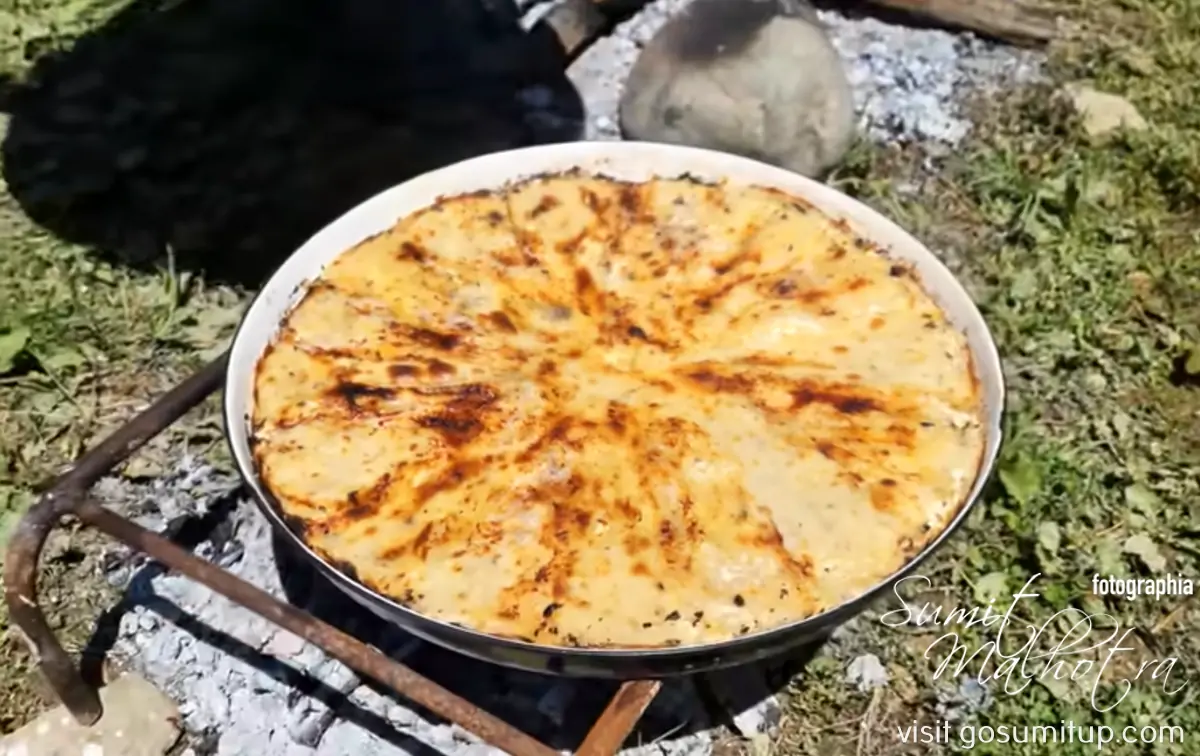
Essentially the most hanging characteristic of Flija is its look. In contrast to a normal layered crepe or the Ottoman-style Byrek, Flija will not be strong.
If you take a look at the highest of a conventional Flija, you see a starburst or sun-ray sample.
The parable means that this sample is only symbolic—a literal “meals providing” to the solar. Nevertheless, the fact is rooted in a superb piece of nomadic engineering.
Conventional Flija is cooked utilizing a Sac (or Saç)—a heavy, bell-shaped iron lid. To cook dinner Flija, the Sac is heated in a separate fireplace till it’s glowing crimson.
The cook dinner then pours the batter onto a tepsia (giant tray) in radiating traces, leaving triangular gaps between the “rays.”
If the cook dinner have been to pour a strong sheet of batter, the top-down warmth of the Sac would trigger the centre to steam and switch soggy whereas the sides would burn.
By pouring in a ray sample, the cook dinner permits steam to flee by the gaps. Within the subsequent layer, the gaps are crammed, and the earlier rays are coated.
This “alternating ray” system ensures that each millimetre of the pastry is crispy, skinny, and infused with the smoky flavour of the coals.
The “Solar Ritual” actually, an historic methodology of convection administration.
Flija and Byrek are each conventional Albanian/Balkan dishes, however they differ basically in preparation and texture.
Flija is a labour-intensive, pancake-style layered dish cooked over an open fireplace, whereas Byrek is a flaky, crammed pie made with pre-made phyllo pastry.
Flija options crepes separated by yoghurt cream, whereas Byrek makes use of fillings like meat/cheese inside dough sheets.
Subscribe to get the latest posts sent to your email.

Leave a Reply