

11 Oct 2025

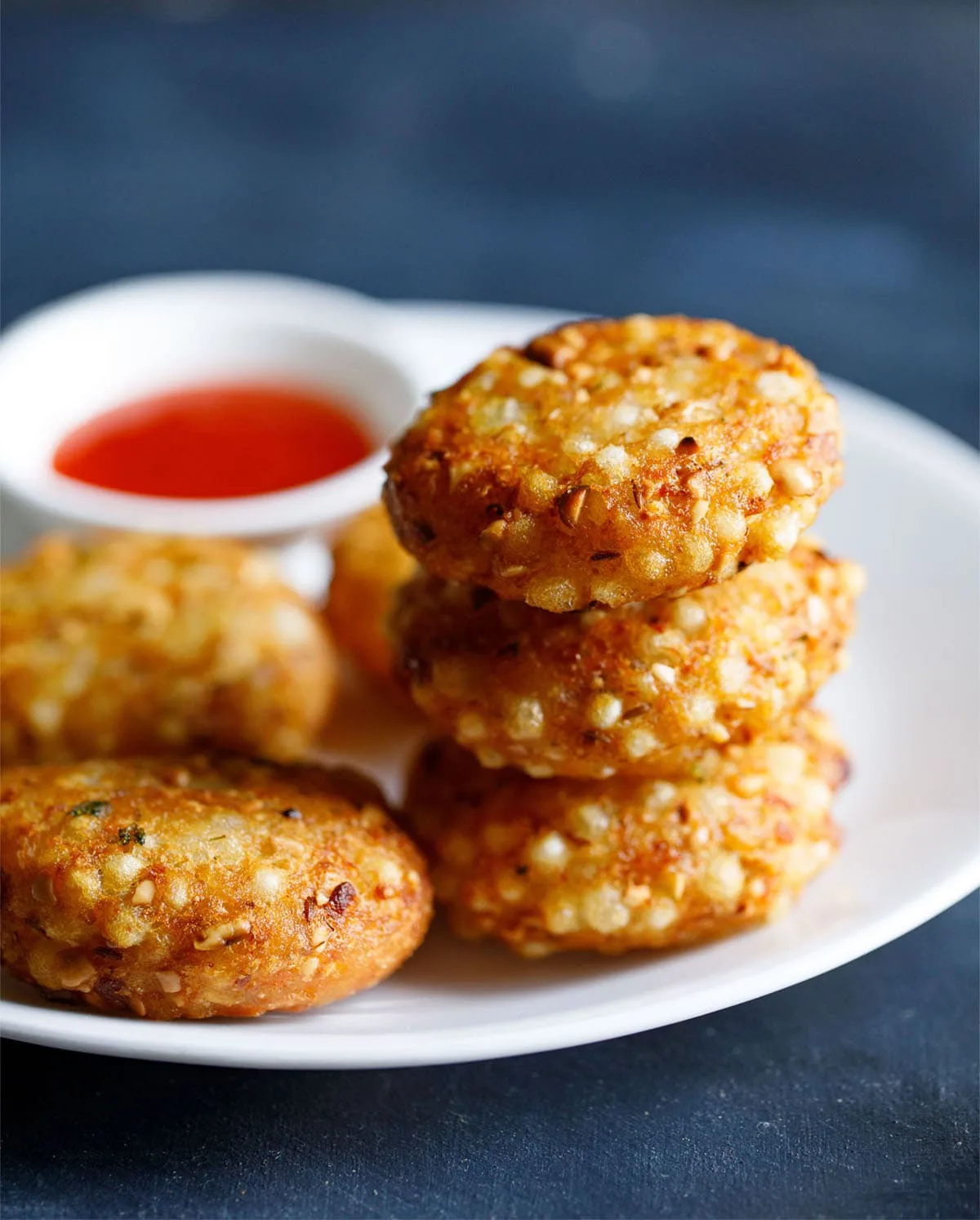
Sabudana Vada, one among our favourite fasting snacks is a crispy, comfortable, savory and mildly candy patty that includes softened tapioca pearls (sago), mashed potatoes, crunchy peanuts, aromatic spices and contemporary herbs. It’s naturally gluten-free and vegan. This foolproof Maharashtrian fashion Sabudana Vada recipe offers you an excellent scrumptious, crispy vada with a comfortable and lightweight inside and may be made as a fasting or vrat snack.
Sabudana, additionally known as sago or tapioca pearls, are small white balls made out of the roots of the cassava plant (tapioca, yuca). They’re extensively used throughout Hindu fasting intervals.
The phrase sabudana is a typical Hindi time period, used primarily in North, Central and Western India. In South Indian languages, it is named javvarisi (Tamil), sabbakki (Kannada), chowari (Malayalam) and sagubiyyam (Telugu).

Sabudana is pure starch and excessive in carbs, which is why it retains you full for longer. It’s a fashionable fasting ingredient throughout Shravan, Ekadashi , Mahashivratri and Navratri, when meals restrictions exclude onions, garlic, wheat, lentils and pulses.
Widespread dishes made with sabudana embrace Sabudana Vada and Sabudana Khichdi.
Sabudana Vada are deep-fried patties with a crisp outdoors and comfortable inside. They’re made with soaked tapioca pearls, potatoes, roasted peanuts, herbs, spices, lemon juice, sugar and salt.
The pearls are soaked for just a few hours to melt. Potatoes are cooked and mashed or grated, then combined with the sabudana, crushed peanuts and spices. The combination is formed into patties and deep-fried.
Potatoes present starch that helps bind the combination, peanuts add crunch, and herbs give taste.
This sabudana vada recipe is an genuine Maharashtrian model I discovered in cooking faculty years in the past. It’s a satvik recipe, so there aren’t any onions, garlic or heavy spices.
The steadiness of potatoes and sabudana makes it simple to bind and form the patties with out including flour. Roasted peanuts add nuttiness, sweetness and a few protein.
The sabudana vada end up crisp and golden on the surface, comfortable inside, and by no means soggy or damaged. They’re loved as a snack or brunch and are additionally bought in candy retailers and by avenue distributors throughout Mumbai and Maharashtra.
Sabudana is a flexible ingredient. Aside from khichdi and vada, it’s also used to make candy Sabudana Kheer, crispy Sabudana Thalipeeth, Sabudana Pakora, Sabudana Tikki, and Sabudana Papad.

Observe these steps to organize crisp and comfortable sabudana vada at house. We’ll start with soaking the sabudana.
1. You must plan forward and soak the sago pearls. It is rather essential to soak the sago very well. Properly soaked sabudana make for a comfortable, gentle and fluffy vada.
Vital: Please chorus from utilizing un-soaked or under-soaked sabudana to keep away from scalding or burns as they’ll burst and shatter in oil when frying.
First, utilizing a colander or mesh strainer rinse 1 cup sabudana calmly twice or thrice draining all of the water. Then soak the rinsed pearls in 2 to 2.5 cups water for five hours at the very least or in a single day.
I all the time soak them in a single day and by morning they turn into properly comfortable. Some styles of sabudana will also be soaked for two to three hours. I get a very exhausting textured sabudana and soaking them for two to three hours doesn’t assist.
So relying on the high quality of your sabudana, soak for two to three hours or extra. To check that they’ve soaked and softened very well, comply with the factors talked about within the second step beneath.

2. When correctly soaked, the sabudana pearls can be tender with none exhausting middle. Whenever you press the pearls between your forefinger and thumb, they’d get mashed simply with a floury texture in your fingers.
In the event you really feel some hardness within the middle, then soak for some extra time. When they’re softened properly, drain all of the water from the soaked sabudana.
Be aware: Keep in mind to not use the sabudana pearls if they aren’t soaked properly or have a tough middle. These under-soaked sabudana will splatter or burst within the scorching oil when frying.
Understand that there shouldn’t be any water logged within the soaked pearls. Water will certainly make the patties moist and sticky.
Therefore these waterlogged patties will take in a great quantity of oil whereas frying making them loaded with oil. Additionally quite a lot of water within the patties might trigger them to shatter or disintegrate within the oil throughout deep frying.
So drain the water very well. You possibly can decide to softly and calmly press the soaked pearls within the strainer with a spoon or spatula. Or put aside the pearls in a strainer (holding a bowl beneath) for some 20 to half-hour dripping of any additional water.
Use this time to prep your different substances. That is what I do. I let the soaked pearls sit within the strainer and start to cook dinner the potatoes and prep the opposite vada substances.
Useful Tip: If in case you discover the soaked sabudana has an excessive amount of of moisture even after straining properly, add some flour to the patty combination like – buckwheat flour, amaranth flour, water chestnut flour. These flours will assist take in the surplus moisture from the sago pearls.

3. Scrub and rinse 4 medium-sized potatoes totally in water first. Then place the potatoes in a 3 litre cooker. Add water which nearly covers the potatoes.
Be aware that you would be able to select to cook dinner potatoes in a pan or in an On the spot Pot.
1. If cooking in a pan, take water and add peeled and chopped potatoes. The water ought to cowl the potatoes. Add a 2 to three pinches of salt if most popular. Cowl and simmer potatoes till fork tender. Later drain the water very well and set the cooked potatoes apart.
2. For On the spot Pot cooking, place a trivet within the inside metal insert of your On the spot Pot. Add 1.5 cups water. Place the rinsed potatoes on the trivet. Seal with the lid and place the valve to sealing. Press the guide/strain cook dinner button and set the time to 10 or 12 minutes with excessive strain choice.

4. For the stove-top strain cooker, boil potatoes for 10 to 12 minutes or 4 to five whistles on medium-heat.

5. Regardless of how you’ve cooked the potatoes, it is advisable test if they’re tender and softened.
1. For the stove-top strain cooker, when the strain settles down by itself within the cooker, then solely open the lid and test the potatoes. Cross a knife or fork by means of the middle of the potatoes and it ought to slide simply with none resistance.
2. For On the spot pot, after you hear the beep when the strain cooking is full, wait for five minutes after which do a fast strain launch. Rigorously, take away the potatoes with tongs and place them in a plate or tray. Verify the potatoes to see if they’re cooked tender with a fork or knife.
3. For pan, test the cooked potatoes with a fork or knife. Then utilizing a strainer, drain all of the water.
Whether or not you’ve cooked your potatoes on a stove-top or within the On the spot Pot, it’s important to drain the water very well. Be certain that you should not have water logged within the cooked potatoes.
Let the potatoes turn into heat. Later peel after which chop them or crumble them. You possibly can even mash them.
Keep in mind to crumble or mash them very well. There should not be any potato chunks within the patty combination.

6. When the potatoes are cooking, you possibly can roast the peanuts. Warmth a pan or kadai and add ½ cup peanuts in it.
If in case you have pre-made roasted peanuts, then skip these steps on roasting peanuts.

7. On a low to medium warmth, stirring typically roast the peanuts. Use a heavy pan, in order that the peanuts don’t get burnt.

8. Roast the peanuts till you see just a few black chars or spots on their husks. They need to be crunchy and properly roasted with no rawness or hardness within the middle.

9. Switch the peanuts to a plate and allow them to cool at room temperature. As soon as they’re cooled, add them in a dry grinder or spice grinder. I’ve eliminated the husks. If you need you possibly can preserve them.
The way to take away the peanut husks? Take the cooled peanuts in your palms and rub them together with your palms over your kitchen sink, in order that the skinny husks fall within the sink and never fly throughout in your kitchen.
You too can take them in a cotton kitchen towel. Convey the sides of the serviette within the middle making a bundle after which rub the peanuts within the bundle together with your palms.

11. Grind to a semi-coarse powder. Maintain the peanut powder apart. You possibly can even make a superb powder in case you like.

3. When the sabudana pearls are drained very well of any additional water, take the pearls in a mixing bowl.

12. Add the mashed potatoes and coarsely roasted groundnuts to the sabudana within the mixing bowl.

13. Subsequent add 1 to 2 chopped inexperienced chilies (about ½ to 1 teaspoon), 1 teaspoon peeled & finely chopped ginger and a pair of tablespoons chopped coriander leaves.
You possibly can skip coriander leaves in case you should not have them.

14. Squeeze 2 teaspoons lemon juice or add in line with your style.

15. Now add 1 teaspoon cumin seeds, 1.5 teaspoons sugar and salt as per your style. You possibly can add much less or extra sugar as you want.

16. Mix and blend totally together with your palms or with a spoon. Verify the style and add extra salt, sugar and lemon juice if wanted.

17. Now take some portion of the combination in your palms and form them right into a flat spherical patty which is neither skinny or thick. This fashion expend the entire sabudana dough combination. Set the patties apart.
Tip: You possibly can rub a little bit of oil in your palms whereas forming the patties, in order that the combination doesn’t keep on with your palms.

18. Warmth oil for deep frying in a kadai (wok) or a pan. Maintain the warmth to medium. Whenever you see the oil shimmering, add a small patty. It ought to come up steadily and progressively within the oil.
Tip 1: If the small patty breaks whereas frying, the combination has extra moisture. Add extra mashed potatoes (you probably have it) or 2 to three tablespoons of buckwheat, water chestnut, or amaranth flour. For non-fasting days, use rice flour. Combine properly, reshape, after which fry.
Tip 2: Be certain that to make use of a well-seasoned pan for frying in order that the vada doesn’t keep on with it.

19. Gently place the patties in scorching oil. Fry them at medium warmth. Don’t overcrowd the pan whereas frying.

20. When one aspect is gentle golden, then solely flip them over with a slotted spoon. Don’t be in a rush to show them because the uncooked, under-cooked vada will disintegrate within the oil.
When the sabudana vada appears to be like crispy, gentle golden, then solely gently flip them over.

21. Flip over once more when the second aspect is golden.

22. Proceed to fry turning over a few occasions till the sabudana vada is evenly golden and crisp.

23. Take away the fried sabudana vada with a slotted spoon draining the additional oil within the pan.

24. Place the fried sabudana vada on kitchen towels to soak up extra oil. Fry all of the sago patties this manner. Fry the remaining batches of the ready vada on this method.

Sabudana Vada may be made for Hindu fasting days or a night snack. It’s crispy, scrumptious and tastes nice with a easy Coconut Chutney and even sweetened Curd (Yogurt).
To make the sweetened curd, add some sugar to the curd and blend it. If in need of time, you possibly can even serve with candy Tamarind Chutney or home made Tomato Ketchup. You too can get pleasure from it with Coriander Chutney.
Serve Sabudana Vada scorching or heat. Within the pictures, I served them with a candy tamarind and crimson chilli chutney. I had made these as a night snack.
Though they style nice whereas scorching or heat, you could possibly additionally decide to serve them at room temperature. A properly made sabudana vada will stay comfortable even after it cools.

To make forward, boil, peel, mash and retailer the potatoes in your fridge a day prior. Roast peanuts and powder them. Refrigerate them for 1 to 2 days.
You possibly can soak the sabudana a day earlier and preserve it within the fridge after draining the water. Any leftover dough combination stays properly within the fridge for 1 to 2 days.
1. Soaking Sabudana
The sabudana (sago) must be actually soaked properly. Not even a little bit hardness ought to be left within the sago as these will shatter or burst within the oil when frying.
The water must be drained properly. Use a sieve or a colander to empty the water. If there may be moisture within the combination, then you definately gained’t get a correct form of the sabudana vada and they’ll get soggy. In consequence they’ll take in quite a lot of oil and might even disintegrate or burst within the scorching oil.
2. Kind of Potatoes
The starch within the potatoes assist to bind these sago patties. You’ll want to use potatoes which have a excessive to medium starch content material.
Keep away from the kind of potatoes like new potatoes or child potatoes which have a low starch content material; because it is not going to be simple to bind the patty combination and the sabudana vada might disintegrate or shatter within the oil whereas frying.
3. Roasted Peanuts
You would use roasted peanuts that are unsalted. Provided that the peanuts are usually not roasted, then it is advisable roast them. You can also make forward the roasted peanuts, powder them and refrigerate for 1 to 2 days.
If they’re roasted, then on roasting the pores and skin turns into flaky and you may take away the pores and skin simply from the peanuts together with your fingers or with the strategies I’ve described within the step-by-step information above.
4. About Frying and Oil Temperature
Ideally, the oil ought to be 180 to 190°C (360 to 375°F). Use a deep-fry thermometer to test, or check by dropping a small sabudana vada within the oil.
If it rises progressively with regular bubbles, the oil is prepared. If it stays on the backside, the oil is simply too chilly; if it shoots up too quick, the oil is simply too scorching.
Chilly oil makes vadas greasy, whereas highly regarded oil burns the surface and leaves the within uncooked. For additional crispness, fry a couple of minutes longer till golden.
If patties break whereas frying, combine in a little bit fasting flour (buckwheat, amaranth, water chestnut) or rice flour if not fasting.
If the dough combination has extra moisture or if there may be not sufficient binding from the potatoes, the sago patties will break and disintegrate in oil.
It’s best to soak sabudana for 4 to five hours. Although relying on how exhausting the sabudana pearls are, the time will range from a few hours to in a single day.
So attempt testing the sabudana you’ve and be sure that the pearls are tender and softened properly after soaking.
No, please by no means do this. All you’re going to get is a gluey, starchy combination that may by no means bind and can be a multitude.
Sure, you possibly can retailer the soaked sabudana within the fridge for 1 to 2 days. Retailer them in a lined container.
You get the perfect texture and style from deep frying sabudana vada. In case you are feeling experimental, you possibly can attempt to bake or air-fry, however you gained’t get a really crispy, fluffy and softer texture. They could be barely undercooked or chewy.
First optionally, utilizing a colander or mesh strainer rinse 1 cup sabudana calmly twice draining all of the water.
Soak the sabudana or sago in water for five hours at the very least or in a single day. I soaked the sago pearls in a single day and by morning they’d turn into comfortable.
When correctly soaked, the sabudana pearls can be tender with none exhausting middle. Whenever you press the pearls between your forefinger and thumb, they need to get mashed simply with a floury moist texture in your fingers.
In the event you really feel some hardness within the middle, then soak for some extra time. Drain all of the water very well from the soaked sabudana.
After draining the water totally switch the sabudana in a mixing bowl and put aside.
On a skillet or in a shallow pan, roast the groundnuts/peanuts until they turn into crisp and crunchy.
Cool after which coarsely powder in a mortar-pestle or in a dry grinder. You possibly can even make a superb powder.
Add the mashed potatoes and coarsely floor roasted groundnuts to the sabudana within the mixing bowl.
Add edible rock salt, cumin seeds, sugar, ginger, inexperienced chillies, coriander leaves and lemon juice to the sabudana . Combine the complete combination very properly.
Now take some portion of the combination in your palms and form them into flat spherical vada or patty. Put aside.
Repeat till you utilize up the complete dough combination.
Warmth oil for deep frying in a kadai. Add a tiny ball made out of the combination.
Fry it on medium flame. If this ball doesn’t break whereas frying, then you’re good to go.
If it breaks, then add 1 to 2 tablespoons of rajgira atta (or amaranth flour) to the combination and blend properly.
Now gently place the vada within the oil. Maintain the warmth to medium or medium-high whereas frying. If the oil is heat, the vada will take in quite a lot of oil and turn into soggy.
Add the vada for frying relying on the dimensions of the kadai. Don’t crowd the kadai or pan.
When one aspect will get golden, then solely flip the vada. In any other case, do not even contact as they may break if not cooked.
Flip over a few occasions in order to fry the sabudana vada evenly. Fry till they’re crisp and golden
Take away them with a slotted spoon. Place on kitchen paper towels to soak up extra oil. Fry the remaining batches of the patties this manner.
Serve Sabudana Vada scorching or heat.
Sabudana Vada may be made for fasting days or as a night snack.
It pairs properly with coconut chutney, sweetened curd (simply combine in some sugar), coriander chutney, tamarind chutney, and even tomato ketchup.
For prep forward, boil and mash potatoes a day earlier, and roast and powder peanuts.
Soaked sabudana will also be refrigerated after draining water.
The patties may be formed prematurely and stored within the fridge. Any leftover combination retains properly within the fridge for 1 to 2 days.
Energy: 107kcal | Carbohydrates: 17g | Protein: 2g | Fats: 4g | Saturated Fats: 0.5g | Polyunsaturated Fats: 0.5g | Monounsaturated Fats: 2g | Sodium: 88mg | Potassium: 233mg | Fiber: 2g | Sugar: 1g | Vitamin A: 5IU | Vitamin B1 (Thiamine): 0.05mg | Vitamin B2 (Riboflavin): 0.03mg | Vitamin B3 (Niacin): 1mg | Vitamin B6: 0.2mg | Vitamin C: 10mg | Vitamin E: 1mg | Vitamin Okay: 1µg | Calcium: 10mg | Vitamin B9 (Folate): 12µg | Iron: 1mg | Magnesium: 21mg | Phosphorus: 45mg | Zinc: 0.3mg
Sabudana Vada recipe from the weblog archives was first revealed on September 2009.
Subscribe to get the latest posts sent to your email.

Leave a Reply