
Comfortable and fluffy eggless cream buns full of nostalgic Indian bakery-style buttercream, dusted with sugar and topped with a cherry for a traditional contact.

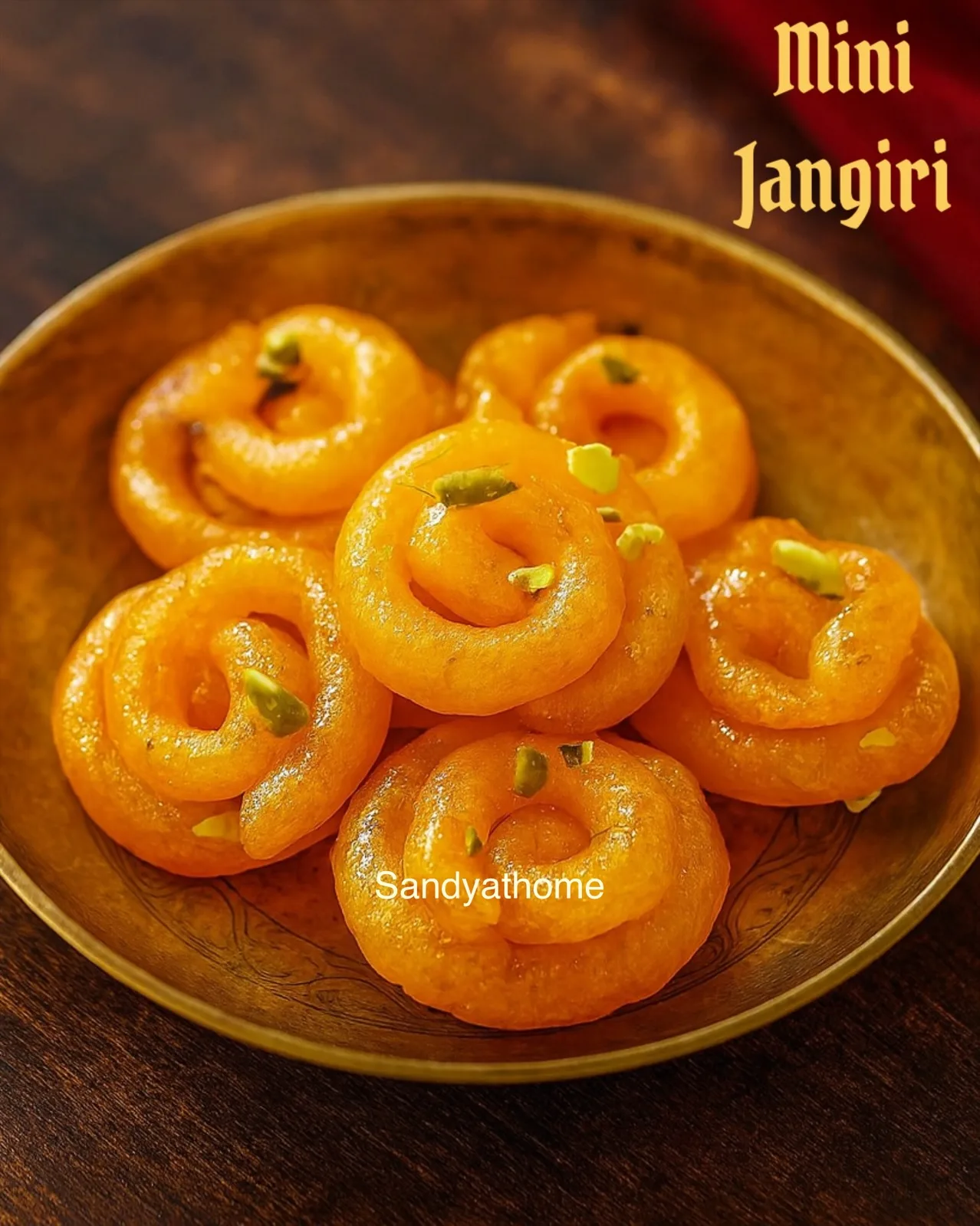
These Mini Jangiris are flower-shaped sweets comprised of fluffy urad dal batter fried in ghee and soaked in aromatic sugar syrup. As an alternative of meals coloration, this recipe makes use of a pinch of turmeric for its light golden hue — pure, pure, and festive. Jangiri has been certainly one of my favourite sweets since childhood — I nonetheless bear in mind watching the intense orange swirls glisten in syrup throughout each competition. I’ve made common Jangiri earlier than utilizing the identical technique — piping the batter into flower loops, frying them in ghee, and soaking them in syrup until they shine like glass. This time, I wished to attempt one thing smaller and cuter, so I made a mini model however yellow in coloration utilizing the identical conventional method. The outcome was simply as smooth, syrupy, and festive — however with bite-sized allure!
As an alternative of meals coloration, I used a pinch of turmeric (as talked about) for that smooth festive glow, maintaining the recipe easy, healthful, and simply as scrumptious because the traditional one I grew up loving.
Lengthy earlier than meals colours and fancy piping bottles, Jangiri—referred to as Imarti in North India—was a royal kitchen delicacy made solely on festive days. Historians hint it again to the Mughal period, when cooks within the imperial kitchens of Delhi and Awadh swirled urad-dal batter into scorching ghee, creating flower-shaped sweets soaked in aromatic sugar syrup flavored with cardamom and rosewater.
As time handed, the recipe traveled south by way of temple cities and festivals, the place it turned the “Jangiri” we all know immediately—smaller, tighter, and much more syrup-kissed. From royal banquets to village festivals, this vivid spiral of sweetness symbolized celebration, prosperity, and togetherness.
Your mini model, coloured naturally with turmeric as a substitute of dye, carries that very same centuries-old spirit—pure, festive, and made to share.
| Ingredient | Position in Recipe |
|---|---|
| Urad dal (entire white) | Types the ethereal base batter that offers jangiri its smooth and fluffy texture. |
| Rice flour | Provides a slight crispness and construction to the batter so the mini shapes maintain effectively. |
| Turmeric powder | Acts as a pure coloration enhancer, giving the jangiri a heat golden hue with out synthetic dyes. |
| Sugar | Creates the syrup that soaks into the jangiri, offering sweetness and shine. |
| Water | Used for each grinding the batter and making ready the sugar syrup. |
| Cardamom powder | Infuses a standard aroma and enhances the syrup’s sweetness. |
| Saffron strands (non-compulsory) | Provides perfume and a wealthy golden tone to the syrup, enhancing festive enchantment. |
| Lemon juice | Prevents crystallization within the syrup, maintaining it easy and shiny. |
| Ghee + Oil | Used collectively for frying — ghee provides aroma and richness, oil retains the feel gentle. |
| Rose water or kewra essence (non-compulsory) | Provides delicate floral notes typical of Indian festive sweets. |
You Could Additionally Like these Recipes:


A: The batter was too skinny. All the time grind with minimal water and examine consistency earlier than piping.
A: Fry on medium warmth until golden, then soak in heat—not scorching—syrup for simply 2–3 minutes.
A: Freshly floor entire urad dal works finest; the feel and puff differ when utilizing flour.
A: Sure! A pinch of turmeric provides a pure golden coloration and is an ideal chemical-free substitute.
A: Stays good for two days at room temperature or as much as 5 days refrigerated. Reheat gently earlier than serving.
A: Each are comprised of urad dal, however imarti has wider loops and comes from North India, whereas jangiri has tighter floral swirls typical to South India.
Comfortable and fluffy eggless cream buns full of nostalgic Indian bakery-style buttercream, dusted with sugar and topped with a cherry for a traditional contact.

Eggless brookies mix the perfect of each worlds — a chewy cookie high with a fudgy brownie base. With a shiny crinkle crust and gooey heart, these bars are the right indulgence for chocolate lovers.

A lightweight, fluffy cloud cake made with simply egg whites, sugar, and a touch of vanilla, completed with a pistachio crunch — a flourless viral dessert that melts in your mouth.

This banana leaf–baked Chenna Poda is a soulful tackle Odisha’s conventional burnt cheesecake. Made with contemporary chenna, sugar, and cardamom, it’s slow-baked to get these golden caramelised edges and smooth heart — no tins, simply pure nostalgia wrapped in leaf.

A smooth, golden halwa made with yellow pumpkin, thick coconut milk, and natural cane sugar — this revival-style candy is impressed by Tamil fasting traditions and temple choices, good for vratham days, prasadam, or a comforting vegan dessert.

A tropical Indian halwa made with cornflour, dragon fruit, ghee, and natural cane sugar — crafted within the Sandyathome revival kitchen by Sandhya Riyaz.

A conventional, melt-in-mouth Tamil candy made with black urad dal, palm jaggery, and gingelly oil — ulundhu kali is rooted in puberty rituals, postpartum therapeutic, and quiet ancestral knowledge.

Ulundhu Paal is a standard Tirunelveli-style candy payasam made with white urad dal, coconut milk, and jaggery. This historical Tamil recipe is a nourishing revival from the previous—wealthy in iron, comforting, and deeply soulful.

A smooth, ghee-rich ragi halwa as soon as made in Tamil Muslim houses after Bakrid — this revival candy is slow-cooked from freshly extracted millet milk and meant to be savored, not sliced.

In relation to Indian sweets, Gulab Jamun is a dessert that holds a particular place in each festive celebration. However what if we add a novel twist to this…

Cinnamon rolls are smooth, fluffy and scrumptious cinnamon flavored candy heat roll. It’s ready with flour, yeast, egg, butter, brown sugar and because the title goes it screams cinnamon taste….

Complete wheat eggless cinnamon roll is nice, smooth, fluffy and scrumptious heat roll. It’s ready with entire wheat flour, yeast, butter, brown sugar and because the title goes it…

Kulfi Falooda is an attention-grabbing and scrumptious summer season dessert that brings collectively creamy kulfi, silky falooda sev, and aromatic rose syrup in a single chilled plate. Topped with crunchy nuts and optionally sabja seeds, this mess-free fusion deal with is as enjoyable to make as it’s to eat!
Subscribe to get the latest posts sent to your email.


Leave a Reply