10 Apr 2026

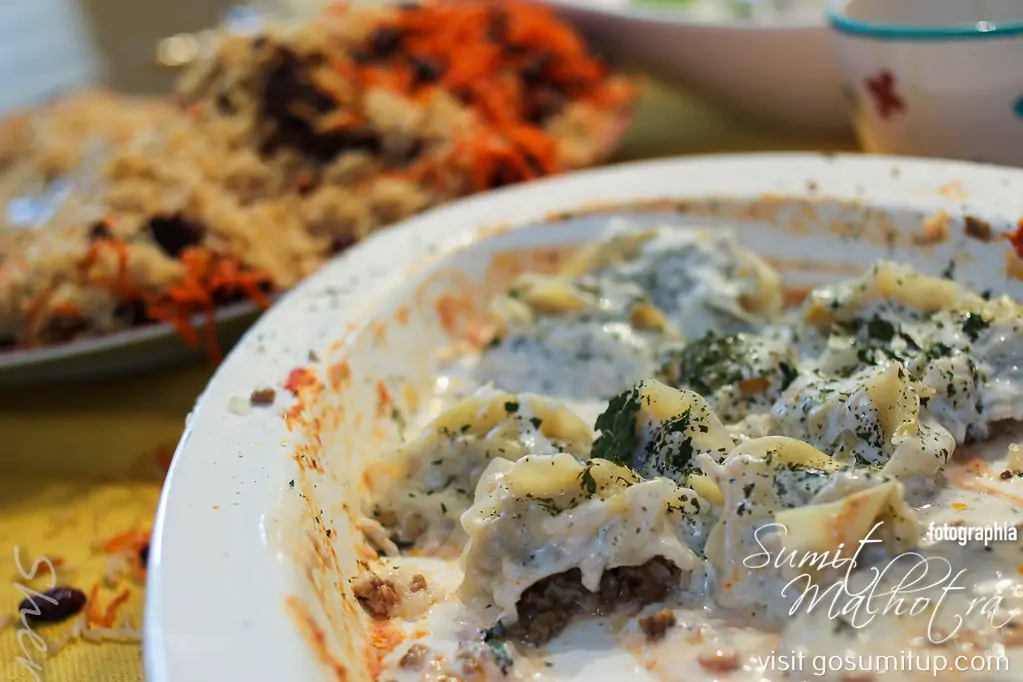
To say that the Afghan Mantu is only a “Chinese language import” ignores the basic culinary evolution that occurred on the steppes of Central Asia.
The Afghan Mantu has a number of “DNA markers” that distinguish it fully from its East Asian cousins:
The Dough: In contrast to the bready, leavened dough typically present in Chinese language Mantou, the Afghan Mantu makes use of a paper-thin, unleavened wrapper.
This requires immense handbook talent—stretching the dough till it’s translucent but sturdy sufficient to carry the steam.
The Yoghurt (Chaka): That is probably the most vital departure. In East Asian dumpling traditions, yoghurt is just about non-existent.
The Afghan Mantu is outlined by its topping of Chaka (strained, thick yoghurt), dried mint, and garlic.
This displays the deep dairy-based tradition of the Central Asian nomads, for whom fermented milk was a staple of life and well being.
The “Double Sauce” Approach: Afghan Mantu isn’t simply served with one sauce. It encompasses a tomato-based lentil or split-pea gravy (Qurma) drizzled over the yoghurt.
This layering of “Sard” (chilly yoghurt) and “Garm” (sizzling meat gravy) is a trademark of Afghan meals philosophy that you simply received’t discover in Beijing or Seoul.
Subscribe to get the latest posts sent to your email.

Leave a Reply