
03 May 2025

“Typically the best issues are probably the most comforting—and probably the most highly effective in custom.”
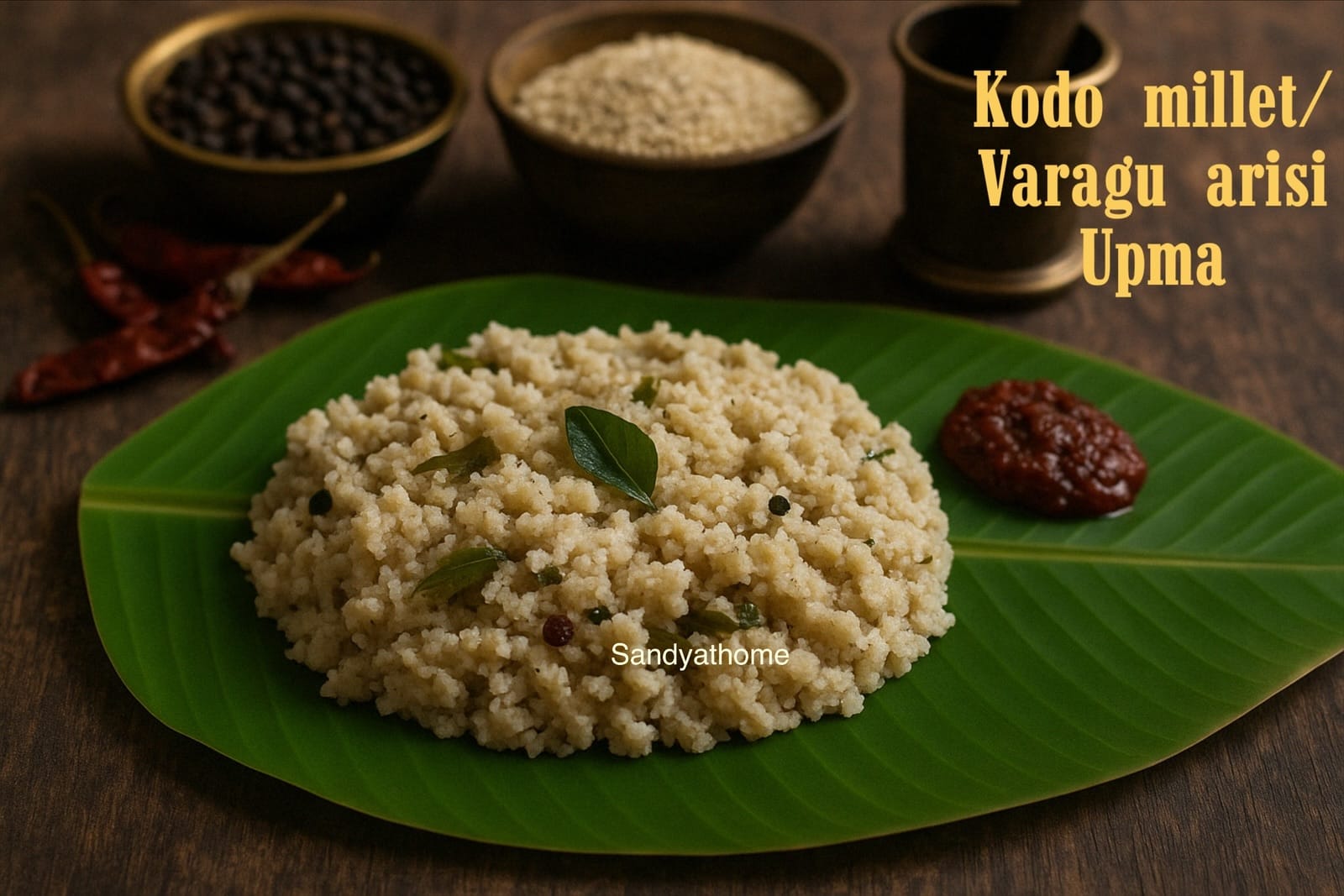
This morning, I stood in my kitchen, staring on the little jar of kodo millet tucked away behind the pantry. It jogged my memory of one thing Paati used to say, “Varagu saapta udambukku velai korayum ma!” (“Once you eat varagu, your physique wants much less effort to remain wholesome.”) That was sufficient for me to deliver out the pot and begin a country, soulful dish—Kodo Millet Arisi Upma.
This isn’t your common upma. No onions. No greens. Simply the fundamentals: kodo millet, a sprinkle of toor dal, complete cumin seeds, peppercorns, and a drizzle of coconut oil. That’s it. And but, each spoon tasted prefer it had centuries of knowledge simmered into it.
Soar to Recipe
Why I Made This As we speak
I’ve been studying lots about Sangam-age meals these days and attempting to deliver these forgotten recipes to life—not with trendy tweaks, however the best way our ancestors might need made them. This arisi upma, with no “extras,” is an ideal instance. Simply complete elements, earthy flavors, and aware consuming.
I served it with a easy chutney and a little bit of garlic thokku—that kick of spice was the one trendy contact I allowed myself.
A PEEK INTO THE PAST
“Meals is reminiscence. And typically, it’s additionally archaeology.”
Do you know this humble upma traces its roots again to over 2,000 years in the past, through the Sangam interval (roughly 300 BCE to 300 CE)? Again then, the panorama of Tamilakam was divided into 5 areas—Kurunji, Palai, Mullai, Marutham, and Neithal. Within the Kurunji and Palai zones, the place farming was powerful and rainfall was scarce, millets like varagu (kodo millet) had been a dietary staple.
– Varagu (Kodo Millet): Historical, drought-resistant, and beloved for its simple digestion.
– Toor Dal (Thuvaram Paruppu): A protein supply utilized in day by day cooking—easy gruels, porridges, and blended rice dishes.
– Pepper & Cumin: Each native to South India and important in Ayurvedic and Siddha drugs. Pepper was so beneficial, it was known as “black gold” by Roman merchants.
– Coconut Oil: A staple within the southern coastal kitchens of the Chola period, recognized for each taste and well being advantages.
So sure—what I cooked right this moment is not only breakfast. It’s historical past.
Cooking Notes
This upma is as humble as it’s hearty.
Different recipes which may curiosity you:
Facet Word on Garlic Thokku:
Whereas the garlic thokku I served on the aspect is my trendy addition, it nonetheless stays near the spirit of historical Tamil cooking. Garlic (poondu) was revered for its therapeutic properties within the Sangam interval, although thokku as a preserved pickle got here a lot later. So this combo is a mix of then and now—identical to my kitchen!
Serve with chutney, garlic thokku, or only a spoon of curd.
Why You Ought to Strive It
If you happen to’re seeking to eat more healthy, reconnect along with your roots, or simply attempt one thing soothing, that is it. It’s:
– Gluten-free
– Mild on the abdomen
– Filled with fiber
– Traditionally wealthy!
“In each historical grain, there’s a trendy lesson: decelerate, simplify, nourish.”
Let’s not let these stunning recipes fade away. If you happen to do that Kodo Millet Arisi Upma, tag me or remark beneath—I’d love to listen to the way it turned out!
Till subsequent time,
– Sandy

Subscribe to get the latest posts sent to your email.
