
06 May 2025

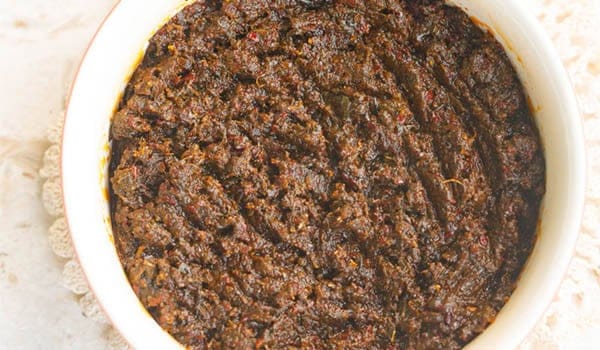
Gongura Pachadi is a tangy, spicy and flavorful chutney from Andhra delicacies, ready utilizing sorrel leaves, regionally known as ‘gongura (Hibiscus sabdariffa).’ The red-stemmed selection is commonly most well-liked for its pronounced sourness, although the green-stemmed one can be conventional, providing a milder tang and softer texture. The jagged leaves are sautéed in oil and blended with tempered spices to create a daring, earthy chutney that tastes scrumptious with sizzling steamed rice, particularly when topped with a contact of sesame oil or ghee.

In Andhra delicacies, ‘gongura’ refers to sorrel leaves, scientifically referred to as Hibiscus sabdariffa. Two primary varieties are generally used:
What I’m sharing here’s a Gongura Nilava Pachadi – a easy, bold-flavored model made with Sorrel (Hibiscus sabdariffa) known as Gongura in Telugu language.
Moreover, the phrase ’Nilava’ in Telugu means one thing that’s preserved or saved for an extended time. The time period ’Pachadi’ is a conventional South Indian phrase for a spicy, tangy chutney or pickle.
A basic from Andhra and Telangana, this Sorrel Chutney is understood for its punchy style and lengthy shelf life. It has a tangy, spicy taste that pairs completely with sizzling rice and a spoonful of ghee or sesame oil.
The truth is gongura is a staple in Andhra households and finds its means into chutneys (pachadi), dals and pickles.
The Gongura Pachadi, specifically, is understood for its daring, strong complicated flavors with delicate bitter undertones. Whereas some name it a chutney and others a pickle, there are numerous methods to arrange this superior dish.

In my recipe, I’ve used green-stemmed gongura leaves, but it surely works simply as effectively with red-stemmed leaves. Be at liberty to make use of whichever selection is obtainable to you. The pink selection provides a sharper tang, whereas the inexperienced brings a milder taste.
My model additionally makes use of minimal oil, making it a lighter possibility that also retains effectively for a couple of weeks. In the event you plan to make a bigger batch or retailer the Gongura Pachadi longer, you’ll be able to enhance the oil amount to assist protect it.
Step-by-Step Information
1. Pluck leaves from stems. It’s best to get 6 cups of gongura leaves. Rinse the leaves very effectively in water to take away any grime or grit. Drain further water from the rinsed leaves and dry the leaves.
Unfold them on a clear fabric for drying. Don’t dry in daylight. Dry in shade or in your kitchen. Drying takes a couple of hours.
It is very important dry leaves in order that any further water doesn’t come into the pachadi. This can spoil it additional. The leaves shouldn’t be moist or moist.

2. Warmth ¼ cup oil in a kadai or sauté pan. Add the 6 cups of gongura leaves.

3. Combine and start to sauté, stirring usually.

4. First, the leaves will wilt. Proceed to sauté till oil separates on the sides. The cooking time for the leaves will vary from 10 to 12 minutes on a low to medium-low warmth.

5. Set the sautéed leaves apart on a plate to chill.

6. Warmth 2 tablespoons oil in one other pan or similar pan.
Add 1 teaspoon mustard seeds. After they crackle, flip off the warmth.

7. Add ½ teaspoon fenugreek seeds and ½ teaspoon asafoetida. Stir to combine and let the fenugreek seeds change colour.
Be sure that the seeds are fried effectively and don’t burn or get browned an excessive amount of.
Notice: If the fenugreek seed stay uncooked or are browned an excessive amount of or get burnt, then they style bitter.

8. Add 7 to eight medium-sized Kashmiri dried pink chilies (I used 5 large-sized) and a couple of sprigs curry leaves (or 30 small curry leaves), and blend.
Tip: Halve or break and take away seeds from the pink chillies earlier than utilizing them.

9. Activate the warmth and maintain it to a low. Stir usually, till pink chilies change colour and look crisp.

10. Flip off the warmth once more. Add ¼ teaspoon turmeric powder and blend.
Put aside this tempered spices combination to chill on a separate plate.

11. Switch to a mixer-grinder. Add ½ teaspoon pink salt or common salt in line with style.

12. Grind to a rough combination.

13. Add the sautéed gongura leaves along with any further oil that has remained after sautéing them.

14. Pulse or grind in small bursts to a rough or semi-coarse texture.

15. Switch Gongura Pachadi to a clear bowl or jar. Hold it air-tight and sealed with a lid.
Tip: Keep away from storing in steel containers or bowls, because the sourness of gongura could react with them.

Refrigerate the bowl or jar with the pachadi and use it as wanted. When eradicating the pachadi, use a clear dry spoon. The pachadi retains effectively for about a couple of weeks when refrigerated.
If you wish to retailer for an extended time period, freeze the chutney in small parts. Thaw it earlier than utilizing.
Gongura Pachadi is greatest loved as a facet dish or combined into sizzling steamed rice. It additionally pairs effectively with chapati.
You possibly can serve it alongside South Indian meals like Sambar, dal or Rasam with rice. It’s equally scrumptious when accompanied by Curd Rice for a tangy-spicy distinction.
Sorrel leaves have a definite tangy and bitter style, with earthy and mildly bitter undertones. These complicated flavors makes it a standout ingredient in chutneys just like the Gongura Pachadi, pickles and curries.
Gongura is greatest recognized for its use in Andhra delicacies, particularly within the iconic dish Gongura Pachadi. It’s additionally widespread in pickles and lends a singular sourness to dals and curries in South Indian cooking.
There are primarily 2 kinds of sorrel or gongura generally utilized in cooking:
– Purple-stemmed gongura: extra bitter and most well-liked in conventional recipes
– Inexperienced-stemmed gongura: milder in tang and tender in texture
Gongura is botanically referred to as Hibiscus sabdariffa and can be known as sorrel leaves in English. In numerous Indian languages, it’s recognized by names like ‘pulicha keerai,’ ’ambadi’, ’pundi soppu’, or ‘pitwaa’.
Extra Pachadi Recipes To Strive!
Please make sure you price the recipe within the recipe card or go away a remark beneath when you’ve got made it. For extra vegetarian inspirations, Signal Up for my emails or comply with me on Instagram, Youtube, Fb, Pinterest or Twitter.

Gongura Pachadi is a spicy, tangy and flavorful chutney from Andhra delicacies, ready utilizing sorrel leaves (gongura/ambadi), pink chillies, curry leaves, fenugreek seeds, mustard seeds, oil and some floor spices. The leaves are sautéed and blended with roasted spices to create a daring, bitter, earthy and scrumptious chutney.
Prep Time 20 minutes
Cook dinner Time 15 minutes
Whole Time 35 minutes
Stop your display from going darkish whereas making the recipe
Warmth ¼ cup oil in a pan.
Add the dried gongura leaves and sauté. The leaves will first wilt, then slowly launch moisture.
Put aside and let the sautéed leaves cool.
Warmth 2 tablespoons oil in the identical pan or in one other pan.
Add mustard seeds. After they start to crackle, flip off the warmth.
Add fenugreek seeds and asafoetida. Combine gently and let the fenugreek change colour barely.
Add dry pink chillies and curry leaves. Flip the warmth again on to low and sauté, stirring usually, till the chillies flip crisp and changer colour to a barely darker pink.
Flip off the warmth. Add turmeric powder and blend. Let this tempering cool fully.
Switch the cooled tempering combination to a mixer-grinder. Grind to a rough powder.
Add the sautéed gongura leaves together with any oil remaining within the pan. Add salt.
Pulse or grind in brief bursts till you get a rough or semi-coarse texture.
Switch to a clear, dry glass jar or a ceramic bowl.
Refrigerate the pachadi in air-tight glass or ceramic bowl or jar and use as wanted.
All the time use a clear, dry spoon when serving to take care of shelf life. It retains effectively for about a couple of weeks when refrigerated.
Serve Gongura Pachadi with sizzling steamed rice with a lightweight drizzle of ghee or sesame oil.
The spicy and bitter flavors of Gongura Chutney additionally pairs effectively with curd rice or sambar, rasam and plain dal with steamed rice.
It may also be loved as a facet with idli, dosa, or chapati.
Diet Information
Gongura Pachadi Recipe (Andhra Fashion)
Quantity Per Serving
Energy 140 Energy from Fats 126
% Day by day Worth*
Fats 14g22%
Saturated Fats 1g6%
Polyunsaturated Fats 1g
Monounsaturated Fats 12g
Sodium 197mg9%
Potassium 20mg1%
Carbohydrates 2g1%
Fiber 1g4%
Sugar 0.3g0%
Protein 1g2%
Vitamin A 1381IU28%
Vitamin B1 (Thiamine) 0.01mg1%
Vitamin B2 (Riboflavin) 0.01mg1%
Vitamin B3 (Niacin) 8mg40%
Vitamin B6 0.01mg1%
Vitamin C 38mg46%
Vitamin E 6mg40%
Vitamin Okay 1µg1%
Calcium 6mg1%
Vitamin B9 (Folate) 155µg39%
Iron 1mg6%
Magnesium 55mg14%
Phosphorus 7mg1%
Zinc 0.1mg1%
* % Day by day Values are based mostly on a 2000 calorie eating regimen.
Subscribe to get the latest posts sent to your email.
